
Drippers and Bubblers
A drip irrigation emitter, commonly known as a dripper, is a small device used in drip irrigation systems to regulate and control the flow of water delivered to plants. It is connected to irrigation pipes and supplies water directly to the root zone in the form of droplets with a precise and consistent discharge rate.
Main Functions of Drippers
- Pressure Reduction: Drippers reduce water pressure by creating resistance in the flow path, allowing water to exit in the form of controlled droplets.
- Flow Rate Regulation: Each dripper has a specific discharge rate that determines the amount of water released over time. This ensures precise irrigation tailored to the needs of each plant.
- Clog Prevention: Some drippers are equipped with self‑flushing mechanisms that prevent clogging caused by suspended particles and sediment buildup.
- Uniform Water Distribution: Drippers distribute water evenly across the soil surface, preventing runoff and minimizing water waste.
Product Types
Types of Drippers
- Pressure‑Compensating (PC) Drippers: These drippers maintain a constant flow rate across a wide range of water pressures, making them ideal for uneven terrain and long irrigation lines.
- Normal (Non‑PC) Drippers: These drippers have a variable flow rate that increases as water pressure rises. They are suitable for systems with stable and uniform pressure.
- Adjustable Drippers: These drippers allow manual adjustment of the flow rate, making them useful when different plants require different amounts of water or when a specific plant needs increased irrigation.
- Inline Drippers: These drippers are built inside the irrigation pipes and are suitable for row crops and linear planting patterns.
- Online Drippers: These drippers are installed externally on irrigation pipes and are ideal for trees, shrubs, and widely spaced plants.
- Bubblers: Bubblers are high‑flow nozzles typically used in special cultivation systems and orchards with mature trees. Due to their high discharge rate, they are usually mounted on dedicated stakes or risers.
Benefits and Applications
Benefits of Using Drippers
- Significant water savings
- Improved irrigation efficiency
- Reduced weed growth
- Minimized soil erosion
- Precise irrigation tailored to each plant’s needs
- Ability to apply water‑soluble fertilizers
Water infiltration into the soil through a dripper is a complex process influenced by several factors, including soil type, water flow rate, and the internal design of the dripper. The following sections explain how this process occurs.
Water Discharge from the Dripper:
- Drippers reduce water pressure through internal spiral pathways or diaphragms, delivering water to the soil surface in small, continuous droplets.
- The discharge rate (flow rate) of the dripper plays a key role in determining how water infiltrates the soil.
Vertical Water Infiltration:
- Once water reaches the soil surface, gravity causes it to move downward into the soil profile.
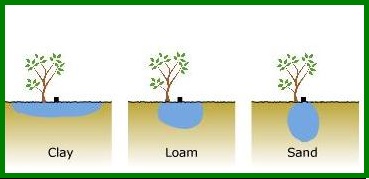
- The speed of vertical infiltration depends on soil texture and porosity. Sandy soils absorb water faster due to larger pore spaces, while clay soils absorb water more slowly.
Lateral Water Movement:
- In addition to vertical infiltration, water also spreads laterally within the soil.
- The extent of lateral movement depends on factors such as soil type, soil moisture level, and water flow rate.
- Capillary forces also contribute to lateral water distribution.
Formation of the Wetted Zone:
- As irrigation continues, a wetted area forms around the dripper.
- The shape and size of this wetted zone depend on the factors mentioned above.
- In light (sandy) soils, lateral spread is less than in heavier (clay) soils.